

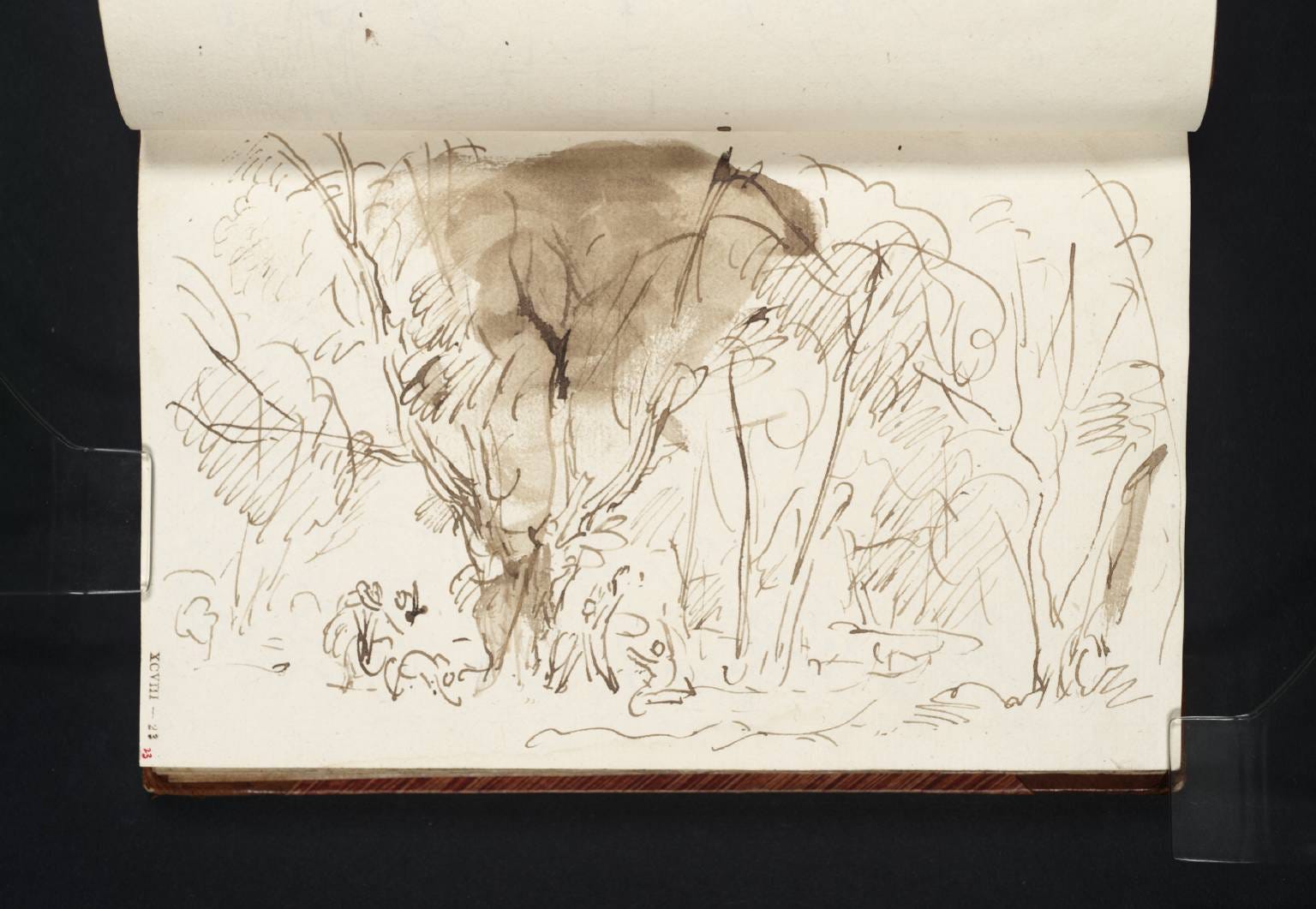
In their 2026-27 programs, London’s major art galleries appear to have taken on a strangely nativist strain; at the British Museum, much fuss has been made over the return of the Bayeux Tapestry, scheduled for September 2026. Elsewhere, the National Gallery have been rummaging around in the basement to find something cheap and cheerful to tide us over until the hole left in their budget by the Van Gogh show that ended in January of last year is patched over, showcasing two unexciting 18th Century English painters, Joseph Wright of Derby and George Stubbs (best known for the ‘Whistlejacket’ horse portrait in their permanent collection.) While British painting is obviously the remit of the Tate Britain, it is still a little surprising that, for the year coming, their have chosen to showcase such distinctly English, and such distinctly unfashionable, artists as Gainsborough on the one hand, and the Bloomsbury Group duo, Vanessa Bell and Duncan Grant, on the other - over, say, a Wyndham Lewis or a Francis Bacon. Let us prepare ourselves for this return en masse of the red squirrels to London’s galleries, with a brief introduction to the history of English painting.
I still remember well my second-hand embarrassment at the strangely pleading tone in which a TA on our History of Art course demanded that one of my French classmates, otherwise well-read, must know who Thomas Gainsborough was. It is a tone I recognized from the voices of English people discovering for the first time that Americans are not familiar with the work of Robbie Williams. The same initial denials (‘No, come on, of course you do…’), the same pointless bargaining (‘Rock DJ. Come on. Rock DJ. You must at least know Rock DJ.’), at last the same realisation that perhaps one’s references are less universal, more provincial, than one thought. Gainsborough is, as I was to discover then, one of a long list of English painters, in this country thought of as canonical but elsewhere no more than a rather dry footnote in the broader history of Western Art. As Roger Fry put it:
“Let us recognize straight away that ours is a minor school. [...] When I consider, then, the greatness of British civilization as a whole, its immense services to humanity in certain directions - in pure science and in political and economic thought - above all, when I consider its sublime achievements in literature - when I consider this magnificent record I have to admit sadly that British art is not altogether worthy of that civilization.”
France, Italy and Spain have no need for their own counterparts to the Tate Britain; their national artists can look the great masters who bedeck the walls of the Louvre, the Uffizi, the Museo del Prado, squarely in the face because they are counted among them - ours are not, so have been quartered away in their own ethnic ghetto. If we begin to rattle off the names of those painters who occupy the first rank of the European canon - Giotto, Raphael, Titian, Poussin, Rembrandt, Velazquez, Vermeer, Manet - we fail to notice even one with an English last name.