White-British Violence
LaoCaiLarry
Editors Note: This article is a guest post by LaoCaiLarry, and old friend of the paper whose Substack can be found here.
When Elon Musk described British people as ‘hobbits’ on Joe Rogan a few months ago, he was touching upon a particular strain of American online right commentary, namely the idea that White people are naturally peaceful and that absent multiculturalism, countries like Britain and America would be free from violent crime, something akin to modern-day Singapore or Japan.
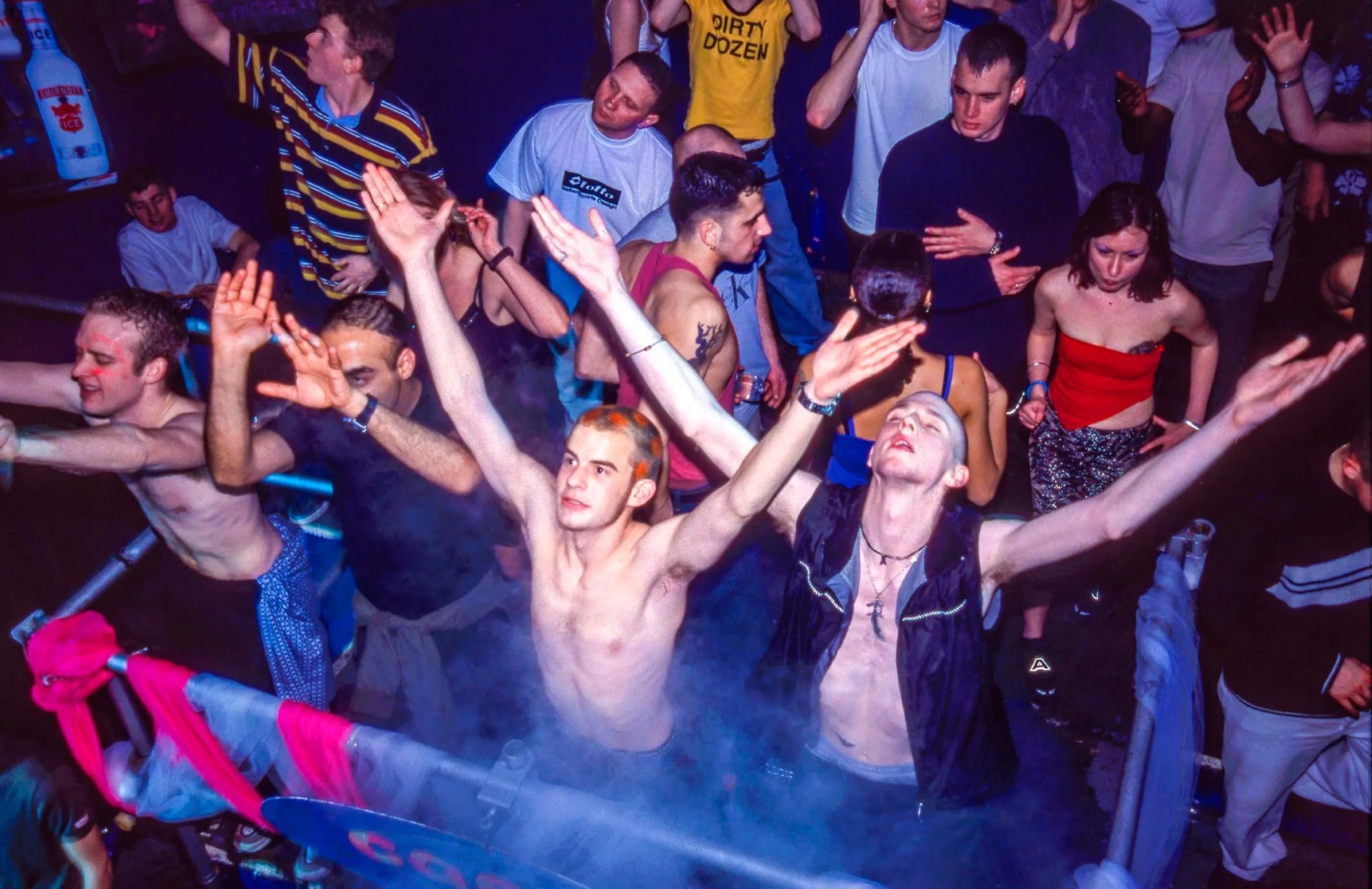
This doesn’t sit well with those of us who remember, first-hand, just how violent White people in a mostly homogenous society really were. The place where this found the most expression was naturally in pubs and nightclubs, usually on a Saturday night, which was a focal point of under-30s lives well into the 2000s. A substantial literature now exists, some of it mine, lamenting the collapse of Britain’s nightlife. What is often missed is that this supposed golden age - recorded well by Theodore Dalrymple at the time - was already brittle and unpleasant. As Darymple puts it:
“On Saturday night, the center of the city has a quite distinct atmosphere. It is crowded, but gone are the shoppers, browsing on shop windows like sheep on grass; almost no one over 30 is to be seen on the streets. It is as if a devastating epidemic had swept over the country and left alive no one who has reached middle age.
There is festivity in the air, but also menace. The smell of cheap perfume mingles with that of take-away food (fried and greasy), stale alcohol, and vomit. The young men—especially those with shaved heads and ironmongery in their noses and eyebrows—squint angrily at the world, as if they expect to be attacked at any moment from any direction, or as if they have been deprived of something to which they were entitled. It is, indeed, dangerous to look them in the eye for longer than a fraction of a second: any more prolonged eye contact would be construed as a challenge, inviting armed response.”
The X account Great British Getty Images captures the visual sensibility of the mid-late 2000s: lads in boot-cut jeans, square-toed work shoes and Paul Smith shirts, stumbling through city centres, rendered in high grain and low dynamic range by turn-of-the-millennium professional photography. White girls with Braids and crop top, frozen mid-shriek. What the images cannot convey is the kinetic misery of it all.
Violence was part of this world in a way that those born after the millennium are unlikely to have experienced unless they regularly attend football matches. Particularly, though not exclusively, male violence. 2020s commentary often mourns the dating-app age, it is hard to argue that the nightclub model of the mid-to-late 1990s was superior. Meeting women typically involved aggressive (and unregulated) door staff, deafening music, overpriced drinks, and a compulsory expulsion at 1–2am. The implicit bargain was stark: either you succeeded on the dancefloor, or you left angry, humiliated, and £60 poorer (a lot of money then werthersorginals.png).
Nostalgia merchants also omit the tedium. Everything took forever. The idea of going out locally in zone 2 (see Peckham or Dalston today), was essentially unheard of, Pubs were dead on the weekend. You either went up to Chelsea, West End or Brixton if really adventurous. This was fewer ways home (no overground, national rail), and almost no flexibility (not last mile Lime bikes or even Boris bikes). South of the river, getting a cab after closing time was an endurance test. Out of this logistical minefield, combined with 8 pints, and a living for the weekend mentality, came routine disorder.
Flashpoints for violence were everywhere: long taxi queues, packed dance floors. In some ways it was refreshingly straightforward. There was none of the caveating, soy grimacing, no earnest “leave her alone, man, she isn’t into you.” It usually ended with someone following someone else into the toilets to administer a Glasgow kiss.
This default to violence sat in a wider context where the social consequences were minimal. Like drink-driving in earlier decades, it was frowned upon in theory but tolerated in practice. It was not limited to the working classes either. My father remembers that turning up to work on a Monday, even at a white-collar job with a black eye wasn’t considered abnormal.
Journalists in the time of Old Fleet Street would considered certain pubs ‘their territory’ (the White Hart for the Mirror, Kings & Keys for the Telegraph) and fights between them were not uncommon. When Michael White, then editor of the Guardian made a joke about the recently deceased Robert Maxwell to Alastair Campbell, Campbell responded by hitting him in the face. Elsewhere in Westminster, MPs who served in the Whips Office didn’t just use boozy blackmail to keep their MPs in line, they would physically attack them.
In much of England, the last Friday before Christmas used to be called “Black Eye Friday” (now known as “Mad Friday”) because of the thousands of office parties which would take place simultaneously, leading to brutal fistfights both between companies and within them. I suspect very few office workers expected to be leathered in the face last week when the cans of Brewdog made their way around the office as a preamble to Be-At-One.
So what actually changed? Fighting still happens in pubs, obviously, but rarely in London, and when it does, it can involve an older crowd. Britain’s ageing population since the 1990s is a major, under-acknowledged factor in the decline of street disorder. The other is technological: ubiquitous smartphones now act as a time sink, dispersing boredom, frustration, and idle antagonism that was a stable of street life last millennium.
The arrival of ride-sharing apps like Uber also mean that one of the main flashpoints for violence - a big brawl over who was first in line for the next taxi - is no longer a problem.
Secondly, a lot of genuinely rough venues closed. Some were done in by licensing decisions. Others were finished off by rising overheads. Many local, booze-led pubs simply couldn’t survive, and while the closure of any pub shouldn’t be celebrated, there were places you wouldn’t walk into unless you actively wanted to get glassed - these don’t really exist anymore.
Then came surveillance and traceability. CCTV became ubiquitous. Cash disappeared. The bloke getting in someone’s face, who might once have earned an elbow to the nose, is now a timestamped incident, tied to a card payment, reviewed weeks later by the police. Even a caution follows you around job wise.
I’ve written before about “Madrification”: the reaction against the gentrified, over-curated pub, exposed brass, reclaimed wood, and £15 small plates. In response, there’s a Clive Martin tendency to romanticise “proper pubs”: carpets, fruit machines, a pool table, and misty-eyed reminiscence about when Brixton was “really rough.”
But speaking as someone who remembers it first time round, it wasn’t fun. It might have been “authentic” it was simply dangerous, unpleasant, and exhausting. That bird you spent all night chatting up who was into you? Congrats, now you’ve hit someone in the face, you’re going home alone.
There is an argument for pubs being cheaper, more relaxed (no AskForAngela), more socially embedded, but that doesn’t require recreating the worst aspects of the past. You can get there through policy: revisiting the smoking ban, fixing the economics of business rates, easing licensing, and making it viable again to run a simple, booze-led local.
The aim shouldn’t be curated nostalgia or performative roughness. It should be places that are affordable, informal, and genuinely social, without reverting to a default tolerance of violence.
But there is a wider point here than the conditions of pubs. That is that British people are not, as could reasonably be said of the Japanese, like the hobbits or the elves a naturally peaceful population. Even if Steve Laws gets his way and Britain becomes a monoethnic society, we will not retVrn to the Shire.
Do not take that as a slander against White-British people, because it isn’t. It is not helpful to conceptualise of ourselves as Elon Musk does, as a victimised naturally timid population. We did not conquer 24% of the planet’s surface by being nice. The towns and villages which Tolkien based the Shire on – Warwickshire and Worcestershire – were some of the main recruiting grounds for the Black and Tans, who implemented what was then the bloodiest counter-insurgency campaign ever seen in Europe.
With a growing economy, lower energy bills and, crucially, young people growing up and living in proximity to city centres we may well see revitalised nightlife in Britain, but some of the ‘social problems’ like crime and disorder could well come back. To put the blame for these issues solely at the feet of mass immigration is to make a mistake. As the below chart shows, there is not a direct relationship between incidents of violence and the sharp increase in immigration in 1997.
Tell a boomer that Britain pre 1997 was a tranquil idyll and you will lose them. You also open yourself up to attacks from the left, part anecdotal, part backed up by statistics, that crime and violence were both extant in Britain before Gordon Brown sold the gold. It isn’t where we’re coming from, or trying to get back to. It’s where we’re going next that matters.


Spot on. The Kaiser Chiefs’ I Predict A Riot, still a favourite pub cover band sing-along tune, perfectly captures actual pre-Blairwave Britain’s average Saturday night atmosphere perfectly https://www.youtube.com/watch?v=hamKl-su8PE