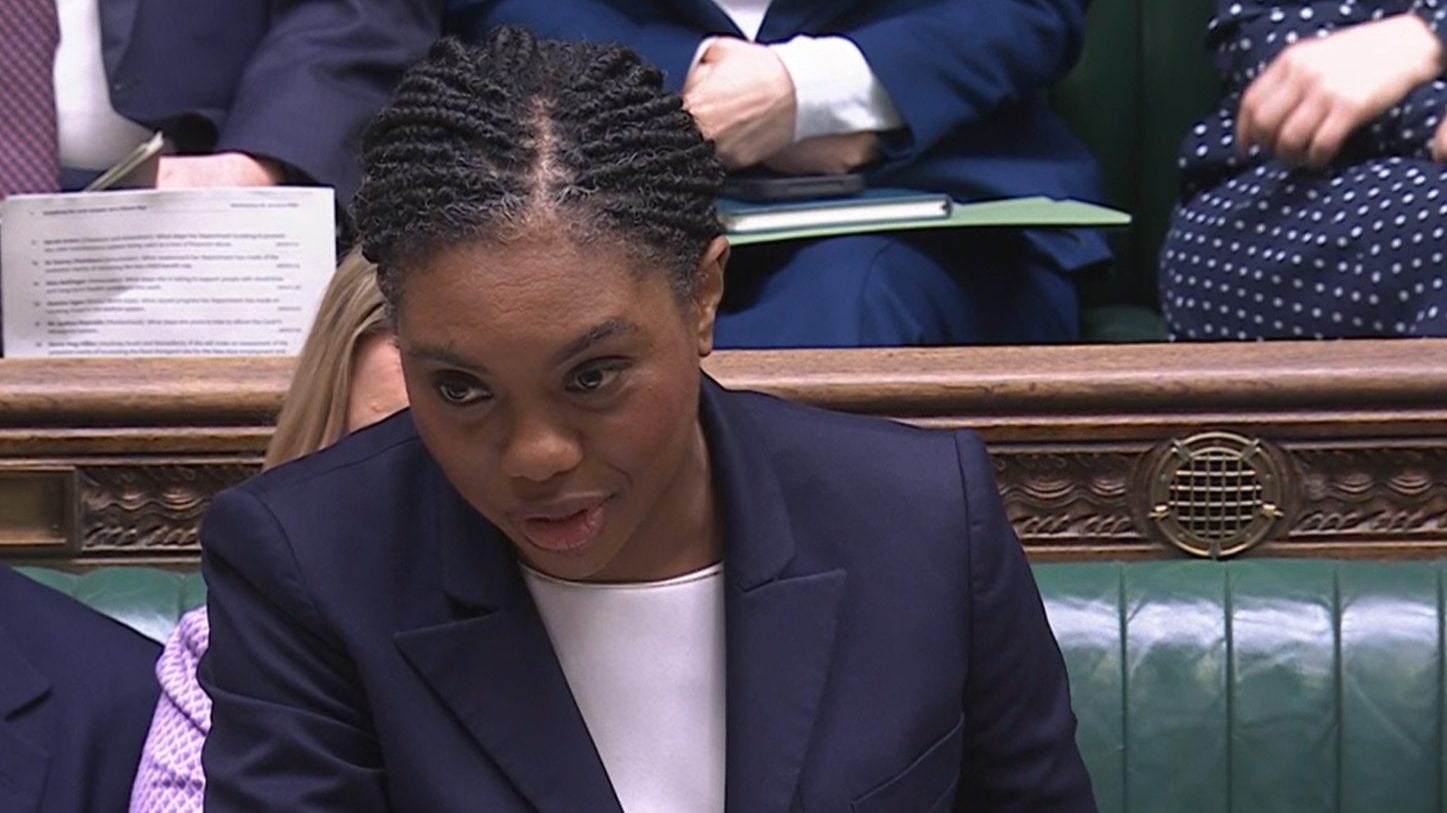
Two-tier Kemi
Trouble Among the Nambikwara
By the Marquis
The Nambikwara men of Brazil’s Mato Grosso region wear nothing but a single sheaf of buriti straw, fastened to a belt, set dangling over the penis. Should a Nambikwara man come to blows with one of his fellows, he will begin by grabbing his own penis with both hands, pointing it menacingly at the enemy, and then rush to snatch his opponent’s tuft of straw, unveiling the rude organ that a dry blade of grass had, until then, so deftly concealed. Such were the Nambikwara as Claude Levi-Strauss encountered them in the late 1930s, recorded in his landmark work, Tristes Tropiques. Though an informant tells me things have changed a great deal since - by the end of the 90s, those locker-room antics had fallen victim to an ascendant Nambikwara modernising wing, which Nambikwara journalists have since described with words like “competent” and “robust.”
Should this give us cause for lament, we can take solace in the fact that the spirit of the game still perseveres here in Britain, in Kemi and Keir’s weekly sparring matches at PMQs: both, by canny twists of rhetoric and clippable ‘mic-drop’ moments, seeking to embarrass one another by ‘revealing’ what the outside world has already decided it can see all too clearly - that neither is fit to govern the country. Not only has Britain never had a less popular prime minister than we do now, but the unpopularity of the prime minister has never failed so dramatically to translate into a rise in popularity for the leader of the opposition. PMQs is dominated by two leaders who, if YouGov’s most recent polling is correct, would fail to win more than 13% of the vote each were an election called today. We may as well be watching a Lib Dem leadership debate. The whole charade has never felt more pointless.
The pair do themselves no favours. Each session follows the same formula, into which the issues of the day - North Sea oil licences, the welfare bill, sanctions on Putin - can be slotted in in Mad Libs fashion. Kemi sallies forth: ‘Mr. Starmer, you have done X, and it is very bad’; fancy footwork from Keir: ‘Ah! But Ms. Badenoch, your party also did X when you were in power!’; Kemi, back on the attack, with that trademark cattiness that puts a spot of drool at the corner of puts a spot of drool at the corner of certain old Tories’ bottom lips: ‘Ah! But Mr. Starmer, your party is doing X right now!’ If in some sudden bout of masochism, if in some bleak hour a wicked angel curls wormish about our inner ear, we force ourselves to listen all the way to the inevitable stalemate that awaits us at the end of these proceedings, we will note that they only draw attention to a conclusion that three quarters of the electorate have reached already. The accusations both Keir and Kemi levy at each other are often broadly correct, because both parties are indeed criminally liable for the state Britain finds itself in today; Keir represents a continuity with the New Labour era which, despite 14 years in government, the Conservatives (the Brexit referendum aside) failed to meaningfully break with.
Last week, PMQs made a bold pivot from the merely dull to the rage-inducing. The sham of bourgeois democracy in Britain has rarely appeared so barefacedly thuggish as in the joint response from the Prime Minister and the leader of His Majesty’s Opposition to the murder of Henry Nowak. On Wednesday, Badenoch opened her remarks with a brief note of condolence to the Nowak family, clearly intended principally as the set-up to a stern reminder to her colleagues of their responsibility to ensure his death will ‘bring people together, not divide them.’ She then embarks on a long, wittering eulogy for Lord Alan Haselhurst, a man who apparently spent much of his life playing cricket, the subject of a few polite-chuckle-raising jokes from Kemi, before dying of being very old. Keir began his rejoinder to her question on the welfare bill by thanking Kemi for her tone in addressing the Nowak case, met with rumbling approval from around the chamber.
Here, and in the language from the state at large, as well that of its belly-crawling court satirists like Ian Hislop, ‘bourgeois democracy’ takes on a meaning beyond the strictly material sense that Marx and Lenin intended. It is bourgeois in that all the worst habits of the middle classes, the same habits we find satirised by Zola or Wyndham Lewis - the obsession with politeness, conflict-averse to the point of neurosis, the allergy to speaking bluntly - are elevated to the level of an inviolable political principle that triumphs over rational debate. Farage’s present enemies find themselves incapable of speaking about the Nowak case except in strings of ill-defined nothing-words that belong to the pages of Chelsea Ladies’ Rotary Club Encyclopaedia of Etiquette circa 1920: ‘decency,’ ‘division’, ‘respect’, ‘bringing people together.’ That the case is inherently political, in so far as it concerns the behaviour of the armed wing of the state, is trumped by the fact that to take this seriously might cause offence to a grieving family: it is simply the height of bad manners. When Farage, at the same PMQs, suggested that the debate depart from abstract nouns and turn instead to the black-and-white question of racial bias in police guidelines, he was met with wild howls of rage from virtually the entire chamber.
This speaks to something of the character of whatever is presently being called ‘Woke 2.0.’ When guidelines like those Farage is referring to were first introduced, the Left made some attempt to justify these positions intellectually. Their proponents, in their accusations of structural racism against the Western nations, would cite things like redlining or the Tuskegee Syphilis experiments, and pull quotes from bell hooks or James Baldwin. Though if, at whatever time we decide to agree marked the peak of ‘Woke 1.0’, ‘The Rest is Politics’-listener-types who would otherwise consider themselves politically moderate were happy to adopt ideas about race that had until then been understood as radical, it was not because they were won over by the arguments (which they now seem to have totally forgotten). Instead, it was because in day-to-day life these ideas were chiefly encountered as rules of politeness, backed up by a degree of institutional support that elevated them out of the realm of the political and into that of conventional bourgeois morality. Much of the conversations around BLM were essentially discussions about etiquette: what words one can and cannot say, what hairstyles are acceptable for White people to wear, which gestures of solidarity are respectful and which appear performative - for much of the middle class, perfectly familiar, comfortable territory.
In the age of ‘Woke 2.0’ (which is only a real thing in so far as it is a by-product of the Western bourgeois becoming illiterate at breakneck speed), the intellectual constructs supposedly supporting these social rules have vanished. Overt racial bias in police conduct will not be defended, by Starmer or even Polanski, with attempts to convince the public that this is a necessary corrective to institutional racism, backed up with a lengthy history of Britain’s role in the slave trade or quotes from Toni Morrison and Audre Lorde. Unlike in the mid 2010s, nobody is going to pretend to read any books. Farage’s attacks will instead be rebuffed only by temperamentally conservative appeals to stodgy public morality; he is being unkind to the bereaved family, he is being vulgar, he is spreading ‘division.’
If like me, dear Reader, mon semblable, mon frère, you too belong to the middle classes, let us comfort one another with this. Keir Starmer, Alastair Campbell and Ian Hislop are late, degenerate members of our species and not the archetype. Ours is the class that gave the world Horace, the Prophet Mohammed, Robespierre, and Lenin - the picaresque heroes of the long, unfinished novel that is Modernity. There is, let us hope, strength left in us yet. Perhaps, sometime this century, our better natures will win out and we shall once more lead the world into a springtime of the peoples. Alas, until then - death to bourgeois democracy, and long live honest men.


Bit zogged to yield to the 'proper' formatting of Bell Hooks