Normal People
Franz Pokorny
There is tentative excitement abroad that Péter Magyar’s meteoric rise heralds a new, stripped-down brand of populism, one purged from the „politics of place“ and other tired Mayisms. Having run a mostly non-ideological, largely negative campaign focused on the government’s corruption and unstable economic management, Magyar and his Tisza party seemingly offer a working example of Bickerton and Invernizzi-Accetti’s „technopopulism“ thesis, which holds that, far from being opposing poles, technocracy and populism are fundamentally similar insofar as they posit a single rationale for governance (expert opinion vs. popular will), and politically compatible insofar as they share a common enemy in a pluralistic political establishment where elites are promoted through parties and beholden to interest groups. Setting aside all debate over this theory’s broader descriptive power, it falls short as a guide to understanding the worldview of Hungary’s current government, which is neither technocratic, nor populist, but combines the worst elements of both with none of their virtues.
Tisza’s particular mind virus is of a drearily familiar strain that has been kicking around Eastern Europe since the 1980s. This is the radicalism of a politically immature professional class that desires, above all things, to finally live in a „normal country“; a country like Germany, Denmark, or, well, Britain. „A normal Hungary has awakened“ declared the centre-right Válasz Online’s Péter Magyari (no relation) the morning after Magyar’s victory. „We are not used to living in a normal country, but we should try, because now we have the chance,“ said the newly elected president of the Hungarian Academy of Sciences. Normality is when the speaker of the house casts out her old oak seat for a modern swivel chair, cabinet announcements begin by rattling off the number of master’s degrees their appointees hold, and ministers go to work in shining blue polyester suits. In a normal country, cabinet meetings are not held in converted baroque monasteries, but in somewhere more up-to-date. In a normal country, the government doesn’t pull the wool over people’s eyes with bots and AI slop, but takes the fight to Grok. In a normal country, the Prime Minister doesn’t rule by unaccountable emergency degrees, but focuses on delivery.
The promise of a return to normalcy has enjoyed an unbeaten winning streak at the ballot box throughout the region for more than three and a half decades. Practically every non-socialist government returned in the region first post-communist elections donned the notionally centre-right, corruption-fighting everyman’s costume that Magyar now wears, and which has more recently dressed (to give a far from exhaustive list) Mikulaš Dzurinda, Kiril Petkov, Igor Matovič and his rather puckishly named party „Ordinary People“, Emil Constantinescu (ooooo remembers???), Szymon Hołownia, Volodymyr Zelensky, and, most successfully of all, Alexander Lukashenko in his 1994 presidential campaign, who, in a rare exception among normalcrats, managed to survive more than a single term in office. Boris Yeltsin, presenting his privatisation drive in a speech on the anniversary of the failed military coup, proclaimed that Russia was „taking just the very first steps toward a normal human life“. Is Magyar so different? That the new prime minister has turned over operational control at the crucial Interior Ministry to a former Budapest police chief, who joined the force under communism and retired from the service sixteen years to run the Fidesz-aligned Mayor of Budapest’s security operation, suggests that all is not quite as normal in Hungary as the friendly Ikea furniture around the cabinet table makes it seem.
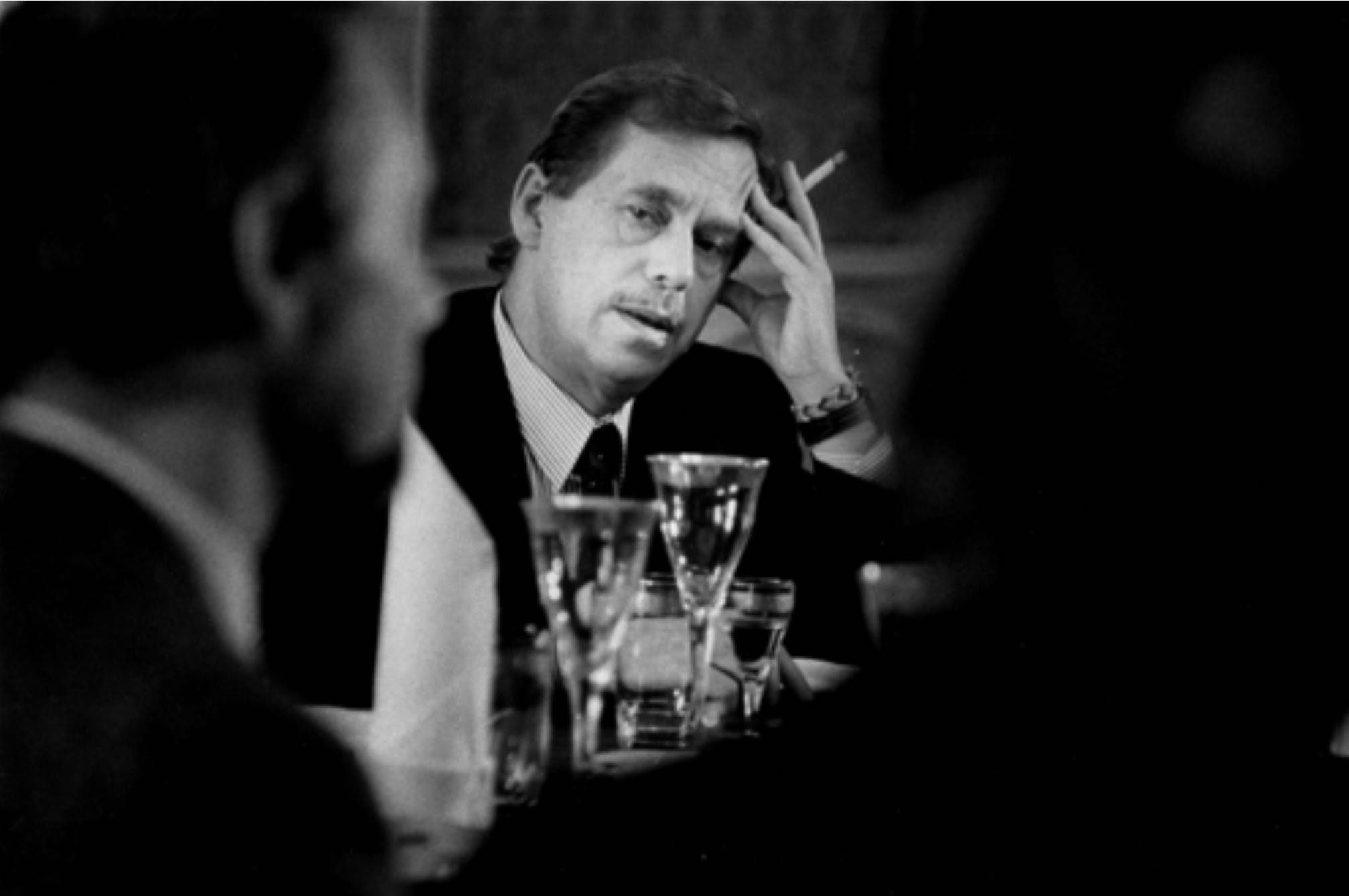
Where does this notion of a normal country come from? Determining the provenance of so generic a phrase is never easy, but the likely source is the Czech dissident Vaclav Havel’s essay The Power of the Powerless, in which the „post-totalitarian“ societies of the post-stalinist Eastern Bloc are indicted for their „absence of a normal political life“. Havel understood normality in terms that might have come from Hayek, Spencer, or Maine: „plurality, diversity, independent self-constitution, and self-organisation“ — these Havel believed to be the natural tendencies of human existence that political institutions could either acknowledge or suppress. Post-totalitarianism differed from the „normal“ totalitarianism of Stalin and Hitler because, whereas the latter were periods of dynamism and upheaval where a small elite attempted to reorganise society on ideas, in the former the institutions of society exist solely to perpetuate themselves meaninglessly. When, later in the essay, Havel introduces his famous greengrocer who places a sign reading „workers of the world, unite!“ in front of his shop window, the point is that the symbolic codes of socialist ideology no longer relate to any material reality or imply any actionable consequences (as they certainly did for Lenin or Stalin, for whom „workers of the world, unite!“ was hardly a LinkedIn platitude), but serve as a ritual semiotics offering „the illusion that the system is in harmony with the human order and the order of the universe“ — a role that might, under different historical circumstances, have been played by national socialist, fascist, or liberal democratic jargon.
It apparently escaped Havel that the idea of „normal political life“, being by his own definition amenable to a broad and ever-evolving menu of social configurations, has a necessarily loose relationship to reality that lends itself even better than communism to playing the role of a ritual semiotics of cosmic harmony and social stasis, whose comparatively concrete prescriptions contrasted sharply to the socialist everyday in a matter that undermined their credibility. It makes no difference if the green grocer’s sign reads „workers of the world, unite!“ or „long live the open society“, but the second is less risible. This, by the way, is precisely the sort of argument that Eastern Europe’s conservatives — old, John Gray-quoting fogeys like Ryszard Legutko — make when critiquing the legacy of the liberal dissidence of the 1970s and 1980s (although this one I thought of myself, mom), but we would be giving actually existing liberals too much credit if we were to argue at the level of pure ideas as formulated by proper philosophers like Havel and not their corruptions in the muddled minds of Karl Marx University of Economics graduates.
In fact, in contrast to Havel’s high-minded abstractions, the ideal of „normal political life“ came to take on a much harder meaning in the minds of the Eastern Bloc intelligentsia who read his writings, namely: social, political, economic, and especially cultural convergence with the dynamic, hedonistic societies of the West, which (as was not lost on the often economically trained young intellectuals) were leaving the socialist economies in the dust while simultaneously abandoning the shared fordist principles that the Cold War world had been built on. The Eastern Bloc liberal has a taste for the Western boomer lifeworld tout court. „West Germany in the 1980s was the perfect society“, one prominent Budapest lawyer involved in liberal activism during the Orbán years once told me, „this is what everything should be like“. And so it would be, if it weren’t for Orbán and his Tory mates.
To live in a normal country thus means to live in an odd collage of the West cobbled together from a murky array of sources that include Hollywood movies, Radio Free Europe, and Ronald Reagan’s farewell speech; a world in which elections are free and fair, pride parades are held, everyone reads respectable centre-right broadsheets like the Frankfurter Allgemeine Zeitung, and politicians get on with the job instead of trying to, well, politicise things. The absence of „normality“ can be found lurking behind all conceivable problems, not always those that might occur in a typical liberal democracy. „A country with a normal army would have wrapped this up in one or three months, not dragged it out for three and a half years“, one disgruntled anonymous Russian woman told The Economist, „[Putin] f—ked everything up completely“. Some observers are more circumspect; a normal country, the liberal Polish ex-dissident Adam Michnik once told the Wall Street Journal, is one with „normal corruption, normal scandals“. Orbán’s Hungary had corruption and scandals too; what was so abnormal about them?
In truth, very little about Orbán’s regime deviated from the path charted by the West over the past two decades. His generous funding for „civil society“ has obvious analogues in Western Europe; the soft censorship of critics through „deplatforming“ is a tactic which Western liberals spent my entire youth affirming. It is common practice for western governments (Canada and Austria, to name two examples) to fund „independent“ journalism through various channels; the amount of self-censorship that goes on in Westminster thanks to a mixture of political scheming and strong libel laws is probably larger than the entire output of the major Budapest dailies. Whether Orbán’s regime was abnormally corrupt is difficult to say conclusively: though certainly prone to more lavish displays of waste and opulence (were those palaces really worse than HS2?), corruption is by nature done under the counter — that Orbán’s excesses were relatively well-documented may just be evidence of a more energetic civil society and a more critical press than exists in the West, despite his well-documented attempts to suppress these institutions.
This, then, is the perniciousness of the „normal country“ meme, which by conjuring up a false image of the West impedes Eastern Europe’s own political development. Orbán’s crusades against immigration and „gender ideology“ were no more than a defence of the social norms of the liberal democratic West at the time Havel came up with his felicitous coinage — there is no reason why, in a truly open society, people must accept these things, only that they debate them without prejudice and reach their conclusions based on the facts. Greengrocers putting out pride flags (a practice ubiquitous in Germany), lockdowns, the permanent mobilisation of the state and its quangos against „populism“ — Havel would hardly recognise any of this as „normal political life“, yet an entire generation has grown up knowing little else. The West today may not be post-totalitarian, but it is certainly post-liberal — as long as the eastern half of the continent’s intellectuals continue to follow its fads, they will find themselves mired in the type of Ruritanian despotism from which they once looked westwards for relief.


I've noticed Russians and Iranians are a bit like this, many of them are are against their regime and in favor of a utopian ideal of a West that never really existed, and that they poorly understand.
Yes, why on earth look to Britain and Germany as they currently are? I quite liked the sound of Orbán if only because the sort of people who have turned us into the Yookay hated him so much.