

Those a step or two higher than myself on Solomon’s pyramid have their own opinions on this sordid business. The version I have heard in the grand lodge of scrolling on X all day long goes something like this.
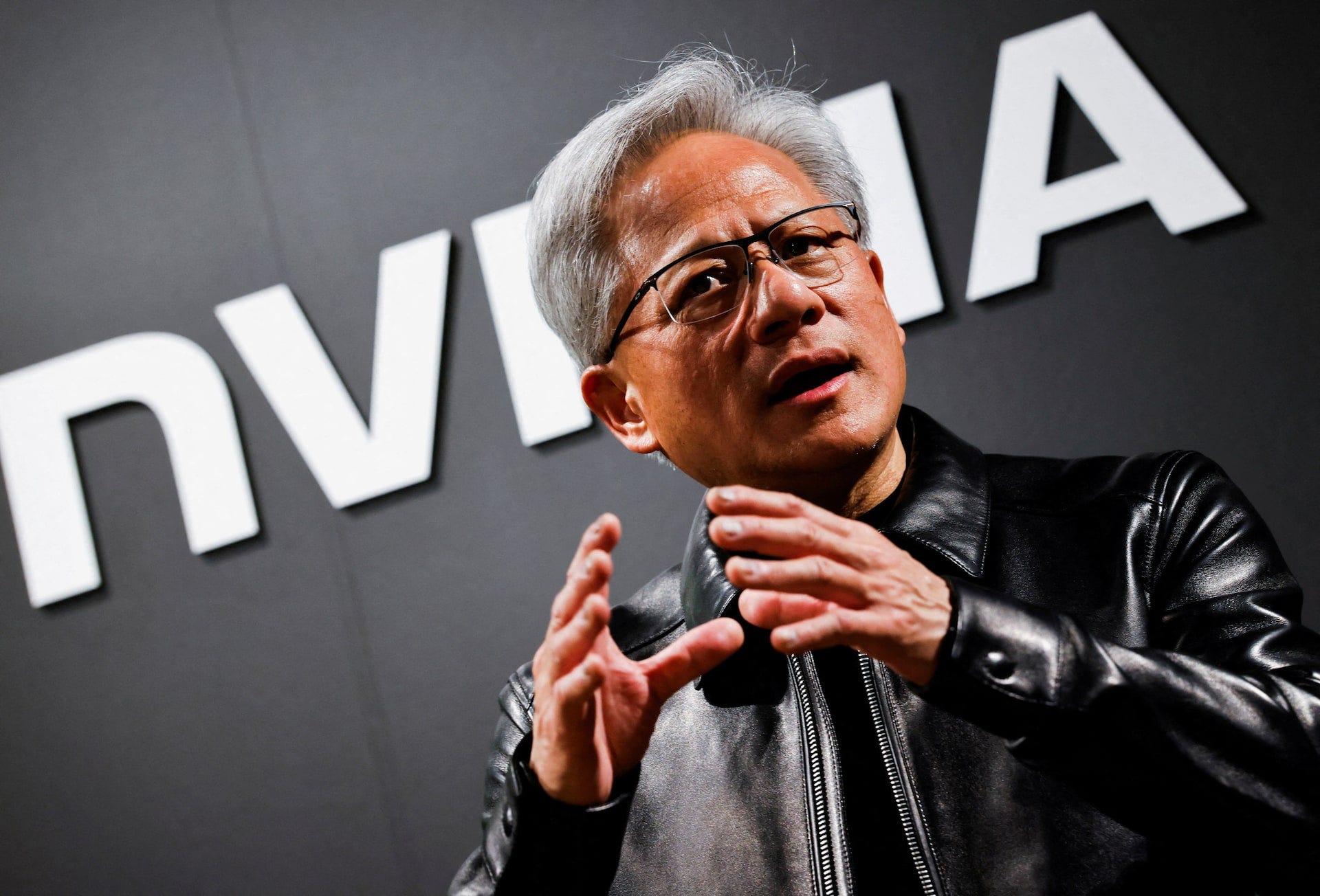
Dario „the Fiend of the Rialto“ Amodei and his friends, the so-called „China hawks in the administration“ have conspired to shoot down the eagle himself, apparently in the midst of planning his own open-weight model to expose Corrupt Claude’s liberal lies. The Beast of San Polo has thus far kept his hands clean of the whole business (Chinese netizens have Rightly Raised the finger at the most senior Brit in the operation, top graduate of Norwich Polytechnic Jack Clark), but his interest in taking out a competitor is obvious. The Demon of Dorsoduro’s dark design is for Anthropic to corner as much of the market as possible in order to wield its standards-setting power to enforce the mandate of an EA-stacked global AI regulatory board set up by a Guelphine Democrat administration (i.e. one led by Ossoff and not a blue Emperor of Guadalupe whom the patriot deep state can live with). Huang’s big, grinning techno-optimist vision of open minds, open markets, and open source was one of the last pillars of Common Sense standing in the Phantom of Murano’s way, while his campily vitalist rock-and-roll aesthetics were doubtless repugnant to the Ogre of Cannaregio’s priggish sensibilities. What we have here is not merely a clash of business interests, but a clash of worldviews — that’s what they’re telling me at the lodge banquet, anyway.
Perhaps a toast before we move on to dessert? As Silicon Valley emerges from the backroom of the national security state and asserts itself as an intellectual power, Huang and the Banshee of Burano represent competing visions for international order. The total capital mobilisation summoned up by Trump’s AI buildout is an inflection point for global economic geography no less than the railway-led integration of the continent that laid the track for America’s Griff nach der Weltmacht in the two world wars. The great intelligence machine, if it can be built, will not only restore America as an industrial power, but, as the „commanding heights“ (as per Will Manidis) of the great transformation — the stable anchor of capital whilst all else is dissolving into air — the US government, as the sovereign backstopping the whole thing, will have leverages over the periphery beyond what it enjoys in the outgoing conjuncture in which it was merely the most important player in a relatively static system.
Maybe you want to take the Orlowski end of the bet. A sudden, swift destruction of capital as the labs underperform within the window they are asked to deliver specific returns cannot be ruled out, but in the long term, the revolutionary potentials of this new technology should be evident in the progress that has already been made. But even if the AI bubble were to burst tomorrow, so tantalising are these possibilities, and so vast the sums of private capital that have been bet on their actualisation, that the American state, as the only player with sufficient financial power to bridge the gap between today and the revolution, would be called upon by temporarily embarrassed investors and dour generals worried about the Chinese stepping into the breach to keep the machine running until the „coming of the real day“. AI is an acronym for American Imperium.
Huang is the soft voice to this big stick. His stance is a variation on the familiar „Wandel durch Handel“, in which a militarily puissant China is reconciled to the fact of American paramountcy by being allowed to share peacefully in the benefits of a technological revolution led from California. This position flows organically from Nvidia’s corporate interests, but the fact that his enemies believe a changing of the guard at the top sufficient to induce a change in the company’s lobbying strategy shows there to be an element of liberal idealism to it as well. Or something else? Despite bipartisan congressional opposition, the President, who above all things fears a Chinese attack on Taiwan before he can reshore defence-industrial supply chains (at least enough to keep the lines rolling), is amenable to this strategy, which he presumably hopes will temporarily secure the Pacific while allowing him to reestablish American power on fresh foundations closer to home. Trump is not a China dove, not by a long stretch, but the earnestness of the situation around Taiwan has mellowed the bellicosity that he showed in his first term. Think of it as a Hitler-Stalin Pact between the great material powers to ensure abundant intelligence and cut Woke Chuck, whose power relies on its scarcity, out of the deal.
Venice has other plans. Like Churchill at Fulton, the Minotaur of San Giorgio Maggiore’s marching orders from St. James Palace are to drag America to the precipice of War. Patriotism is the last refuge of a scoundrel — the EAs’ superior brainpower has told them that the great American public is untroubled by anything so rarefied and redolent of „saving the whales“ as AI singularity, and have instead settled on Fu Manchu as the bogeyman for AI regulation. The point is to turn the „frontier“ into military zone sequestered from the general public while binding AI oversight into the broader western alliance system (as the Democrats close in on the presidency you will begin to hear calls for a „NATO for AI“), ideally with additional domestic legislative safeguards to prevent (future, potential, hallucinatory) ghibellines at the Department of War from wielding it, Dr. Strangelove-style, as a tool of unilateral American power. Filibuster or not, congressional Democrats and their conservative allies will use their majority to pass a bipartisan AI safety bill that will give the Wraith of Giudecca everything he wants. The threat of American unilateralism in the AI space replacing the present „peaceful competition between systems“ would be such a threat to China’s long-term position that hawks within the CCP would be strongly inclined to play their hand sooner rather than later, probably within the current presidential term before America can restructure its supply chains, ramp up firepower production, and figure out a way around the Taiwanese semiconductor bottleneck.
War is the Guelphs’ ace in the hole, their (literal) nuclear option, and for that reason they will be reluctant to play it. The goal is, and has always been, to blunt the socially disruptive potential of new technologies while allowing them to keep the rentier economy afloat through stable economic growth under a global division of labour. Ideally, from the Venetian perspective, an AI regime carefully regulated by a committee of sound chaps would shore up productivity against a dwindling human capital pool, redistribute income towards manual labour in the Global South, and allow social democracy to continue forever, all the while enshrining the rule of three as the law of the land. The Werewolf of Torcello will rattle his sabre against China like the old KMT hands in Arizona used to do while President Ossoff presides over whatever the AI safety version of the Soviets recycling eurodollars through London on the sly is going to be (probably more chip export loopholes and poorly disguised honeytraps at Anthropic) — alles Drängen, alles Ringen, ist ewige Ruhe in Gott dem Herrn. Trump’s providential service to mankind has been to propel American energies into such high gear as to render this cordial „James Bond in the Caribbean“ world untenable, forcing the Guelphs to either meet his challenge with a creative response or to perish. Meritocracy.
Postscript: I didn’t stay long enough at the masons’ dinner to find out what was going on with Friday’s air traffic control mayhem, but, as the AI bubble threatens to burst and competition between the various big beasts in London and Washington intensifies, spectacular AI-related mishaps and „cyberattacks“ of this sort will become increasingly common methods of shaping the political terrain in Washington through what I would call „fully-immersive guerrilla lobbying“ if I were planning an exhibition on it at the Saatchi Gallery. American politicians don’t really understand this stuff, they would rather play the three trillionth round of „Jews versus Catholics“ or call out the Goblin of Burano for being intimidated by black excellence, they need a spectacle to bring it to their attention, and this the Vampire of the Arzanà has delivered.