

“The third generation was quite different, partly because it was dominated by Milner, one of the few completely serious members of the second generation. This third generation was serious if not profound, studious if not broadly educated, and haunted consistently by the need to act quickly to avoid impending disaster.”
— Carroll Quigley, The Anglo-American Establishment

Britain is the pure idea of progress. She is also a green and pleasant land of warm ale, Constable landscapes, boozy Clubland lunches, fair play, well-remunerated graduate schemes, utilitarianism, and the Cambridge University Society of Women. Or perhaps she should be, and at least sometimes, somewhere, she still is. And if she is so, all of it at once, it is because the mind has the power to reconcile these contradicting thoughts, perceptions, and the feelings they evoke in a higher synthesis; a synthesis with the melodious and alluring name of Britain. Through what eyes do we see her reflection, and ourselves reflected back in it?
Toynbee begins A Study of History with a selection from the Lay of the Battle of Maldon, to which he will recur throughout the text:
“Thought shall be the harder,
Heart the keener,
Mood shall be the more,
As our might lessens.”
The Lay of the Battle of Maldon describes a battle fought and lost by the Anglo-Saxon Earl Byrhnoth against a Norwegian invasion party in 991. Though there is little consensus as to the poem’s authorship or accuracy, for our purposes these do not matter, for its place in history is clear and may discerned by simply perusing the Wikipedia page. “Maldon is remarkable […] in that it shows that the strongest motive in a Germanic society, still, nine hundred years after Tacitus, was an absolute and overriding loyalty to one’s lord” — will you gainsay a Scotsman’s word, o reader? Maldon is a poem that besings martial valour and the political institution of lordship; Toynbee was a North London man cold to such delectations, nevertheless we find them glaring back at us from the beginning of this careful and deliberate scholar’s magnum opus like a sinister African tribal mask balefully fixes its gaze on a child rummaging around his parents’ attic. This is a puzzle, and the inherent intellectual pleasure in delving the mysterious invites into to inquire into the hidden connection between war and lordship or kingship (for what lord is there today but the king?), and their curious presence amongst the furniture of Toynbee’s mind.
Kingship, the most generic and thus enigmatic political form, is an idea towards which we have been working towards since the beginning of this article, and its intimate association with war in Maldon, reprised in Toynbee, suggests us to have at last found the key. To crib from Schmitt’s notes, war is the apotheosis of the political: it occurs when oppositions are escalated to the point where their fundamental irreconcilability can no longer be ignored or mitigated through compromise. War is the recognition of a fundamental contradiction in human affairs and an attempt to correct it by forcefully subordinating one value to the other, and with it the individual will that asserts that value as such.
Such a definition may suffice to clarify warfare as a social phenomenon, but it falls short of capturing its experiential dimension. For the soldier who fights it, war holds no contradiction: if he is not one of the rare few in it out of sheer “love of the game”; for whom war has no more to do with the fundamental opposition between two wills than does rugby or football, then war to him is yet another obligation to his sovereign to be endured for some lofty reason of state he cannot comprehend. For him, the oppositions that cause men to take up arms against each other fade to reveal a hidden unity of purpose; a common participation in the mystical tragedy of statecraft. “There’s only one serious occupation for a chap now, that’s killing Germans. I have an idea I shall rather enjoy it,” says the protagonist in Waugh’s Put Out More Flags — there is little suggestion of actual polemic with the German people, rather the forsaking of those social entanglements and private schemes in which honour or at least desire really is on the line, only prevented from erupting into violence by the rigid discipline of custom, for the sublimer pleasure of doing one’s duty; of leaving the self behind and dissolving in the unfathomable mind of King and Country. Play up, play up and play the game! In war, the sovereign’s dormant limbs are roused, what was implicit is now proclaimed openly, and we are initiated into the mystery of kingly transcendence that Mishima perceives in this passage in Sun and Steel, a book only I have ever read:
“My first — unconscious — encounter [with the sun] was in the summer of the defeat, in the year 1945. A relentless sun blazed down on the lush grass of that summer that lay on the borderline between the war and the postwar period—a borderline, in fact, that was nothing more than a line of barbed wire entanglements, half broken down, half buried in the summer weeds, tilting in all directions. I walked in the sun’s rays, but had no clear understanding of the meaning they held for me.
Finespun and impartial, the summer sunlight poured down prodigally on all creation alike. The war ended, yet the deep green weeds were lit exactly as before by the merciless light of noon, a clearly perceived hallucination stirring in a slight breeze; brushing the tips of the leaves with my fingers, I was astonished that they did not vanish at my touch.
That same sun, as the days turned to months and the months to years, had become associated with a pervasive corruption and destruction. In part, it was the way it gleamed so encouragingly on the wings of planes leaving on missions, on forests of bayonets, on the badges of military caps, on the embroidery of military banners; but still more, far more, it was the way it glistened on the blood flowing ceaselessly from the flesh, and on the silver bodies of flies clustering on wounds. Holding sway over corruption, leading youth in droves to its death in tropical seas and countrysides, the sun lorded it over that vast rusty-red ruin that stretched away to the distant horizon.”
Sun and Steel is an aesthetic treatise; Mishima is not writing political theory. There is no reason to believe that this description of the sun is anything other than an allegory for the notion of beauty as the supreme metaphysical principle that Nietzsche elaborates in The Birth of Tragedy and has its origins in Heraclitus. Yet Mishima’s symbolism opens up a second possibility not necessarily opposed to his authorial intentions, for the sun — from whom the tennō once claimed descent, and perhaps privately still does — is a classic representation of kingship in Japan as in the West. The war descended upon an overgrown and brittle Japanese society like wildfire, incinerating all competing poles to the emperor, who now stood aloof — shielded from his people by a foreign guard whilst his civilian government continued to function and his shadowy scientific advisers gathered compromat on MacArthur and his staff — as the sole repository of historical experience, higher knowledge of the state, and of that mystical unity between the dead, the living, and the unborn that is called a body politic. If the emperor was not previously a god, the war made him one; where his sacrality hitherto made him an object of public reverence and a political resource for various parties to exploit, only with his desacralisation to the world was his sacrality reified, and this is why today he appears Jupiterian presence in the Japanese political firmament, who need not act because he has already realised all of his ends.
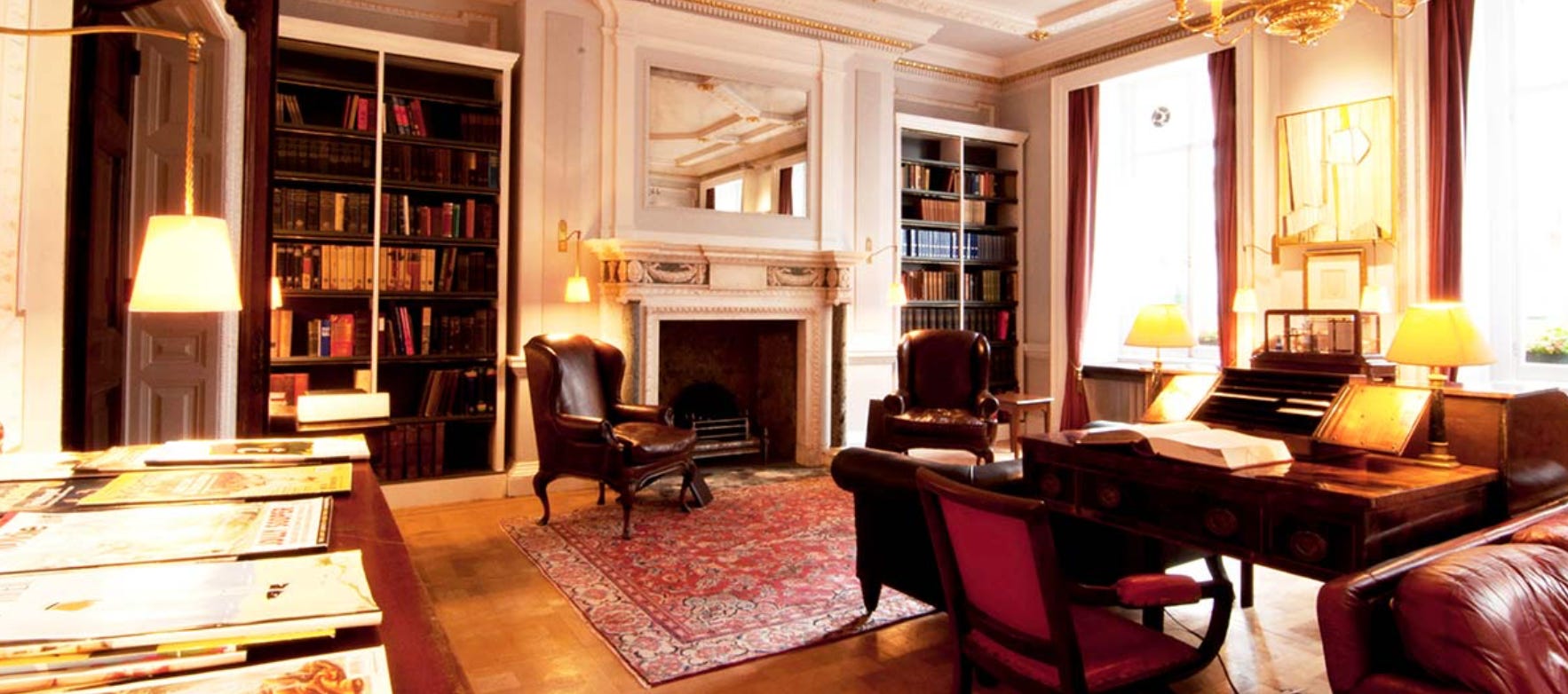
If this seems familiar, then surely because our own island nation underwent the same process, albeit at the more leisurely, methodical pace with which all things in this country are accomplished. The first step was the peaceful eclipse of the “Venetian” aristocracy that the 1832 Reform Act set in motion, although the monarch exhibited discretion in preserving the outward appearances of the institutions they had made for the next 165 years as a procedural and symbolic constraint on the New Men whom the slow, gradual expansion of the democratic principle brought into the state’s bloodstream. Democracy has a natural affinity with tyranny, and in Britain it was no different, but tyrants rightly fear the spirits they have summoned, and so it hardly served the Crown to be rid of the aristocracy or its parliamentary spectre so long as it was never entirely sure it could control the workers’ movement. This all changed in the 1980s, the policy battles of which showed up mass man as a paper tiger easily placated by consumerism and spectacle, and the workers spent as a political force. Under New Labour — whose sudden and resistible rise had the happy side effect of preventing the Conservative Party and the experienced policy team at Smith Square from laying down roots as a power of its own — what remained of the low Tory pageantry of constitutional life could be safely dismantled, for there no longer appeared any organic powers in the land with ambitions for it to constrain.
Once the wheels ground into motion, the whole thing was done with a remarkable celerity. Blair’s constitutional desecrations, their intellectual origins vainly sought in the thoughtless zeal of the small-minded managers and Woke radicals who carried them out, left one ancient institution more entrenched than ever before. Roger Scruton penned his elegy to England and Peter Hitchens wrote of the abolition of Britain, that low Tory nation in which the common law, good manners, church on Sunday, people wearing suits, milk vans, and all the rest merged together in an organic whole in which every part sung in harmony like the planets traversing the heavens. They are indeed gone, but look around you: has Britain really disappeared, and we our mortal coil shuffled off? The idea that a thing can swap out every one of its parts and still remain itself is only legible if some essence exists that transcends its material existence, an everlasting idea of the kind that Plato glimpsed, and this idea in Britain, as in Japan, is instantiated in the institution of monarchy, whose own inner idea is kingship; the sun; the divine fire. Kingship is the fact of our being on these isles. There are no others.
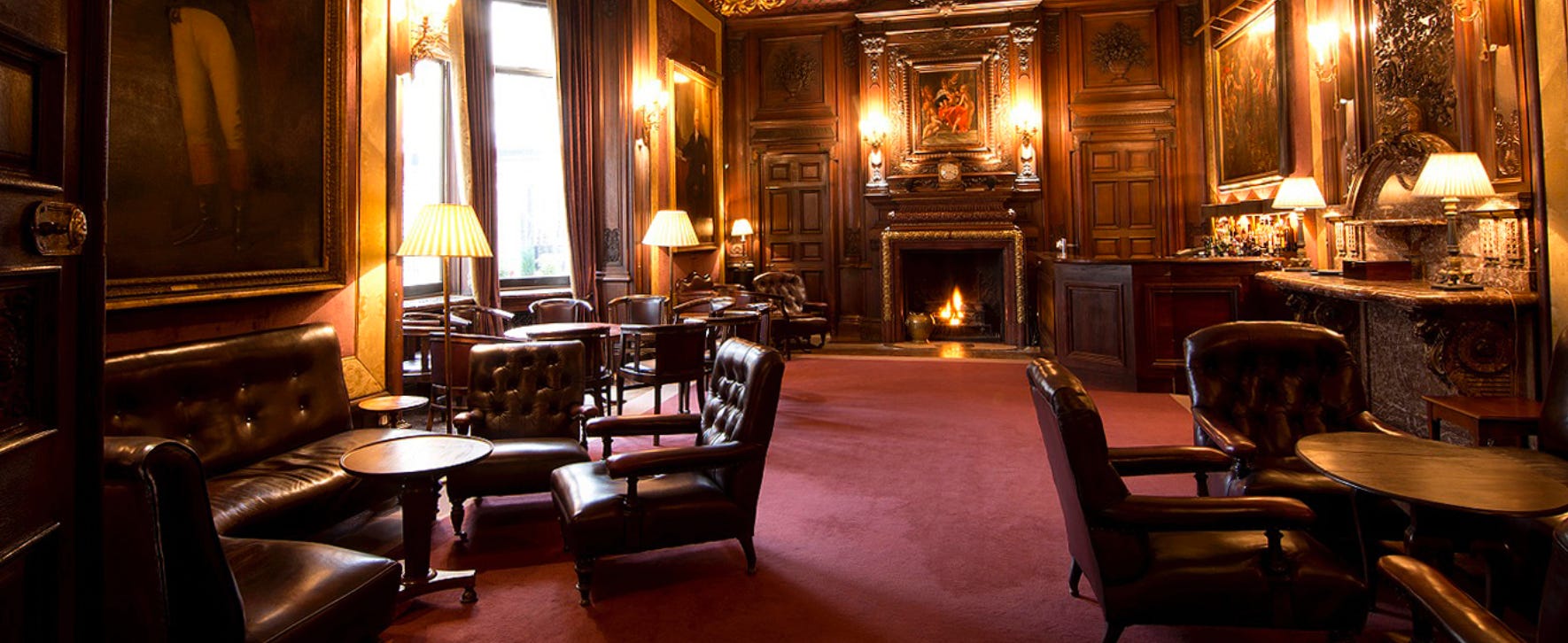
But this was all worked out two and a half thousand years ago by Heraclitus, for whom the fire is a poetic shorthand for the dissolution of opposites in a higher frame of reference. The present author is not a philosopher and has little interest in becoming one; to place the following on firmer ground than he himself can provide, let us consider the words of the greatest philosopher, Nietzsche:
“The everlasting and exclusive coming-to-be, the impermanence of everything actual, which constantly acts and comes-to-be but never is, as Heraclitus teaches it, is a terrible, paralysing thought. Its impact on men can most nearly be likened to the sensation during an earthquake when one loses one’s familiar confidence in a firmly grounded earth. It takes astonishing strength to transform this reaction into its opposite, into sublimity and the feeling of blessed astonishment. Heraclitus achieved this by means of an observation regarding the actual process of all coming-to-be and passing away. He conceived it under the form of polarity, as being the diverging of a force into two qualitatively different opposed activities that seek to reunite. Everlastingly, a given quality contend against itself and separates into opposites; everlastingly these opposites seek to reunite. Ordinary people fancy they see something rigid, complete and permanent; in truth, however, light and dark, bitter and sweet are attached to each other and interlocked at any given moment like wrestlers of whom sometimes the one, sometimes the other is on top. Honey, says Heraclitus, is at the same time bitter and sweet; the world itself is a mixed drink which must constantly be stirred. The strife of the opposites gives birth to all that comes-to-be; the definite qualities which look permanent to us express but the momentary ascendency of one partner. But this by no means signifies the end of the war; the contest endures in all eternity. Everything that happens, happens in accordance with this strife, and it is just in the strife that eternal justice is revealed. It is a wonderful idea, welling up from the purest strings of Hellenism, the idea that strife embodies the everlasting sovereignty of strict justice, bound to everlasting laws. Only a Greek was capable of finding such an idea to be the fundament of a cosmology; it is Hesiod’s good Eris transformed into the cosmic principle; it is the contest-idea of the Greek individual and the Greek states, taken from the gymnasium and the palestra, from the artist’s agon, from the contest between political parties and between cities — all transformed into universal application so that now the wheels of the cosmos turn on it. Just as the Greek individual fought as though he alone were right and an infinitely sure measure of judicial opinion were determining the trend of victory at any given moment, so the qualities wrestle with one another, in accordance with inviolable laws and standards that are immanent in the struggle. The things in whose definiteness and endurance narrow human minds, like animal minds, believe have no real existence. They are but the flash and spark of drawn swords, the quick radiance of victory in the struggle of the opposites.”
It would be easy to tame this notion through the harmless “cosmic toryism” we encounter in baroque astronomy, contrapuntal music, and classical economics, in which the uncoordinated actions of countervailing forces come together to reveal a divinely ordained harmony. But a more productive avenue is opened up by strong-on-defence Scot David Hume’s problem of induction, which gestures towards the old medieval notion of a deus absconditus; a god who can undo his creation and disobey the laws of nature or reason. Per Hume, while we may observe the world operating to apparently predictable rhythms, we can never be certain whether these are in fact natural laws or merely special applications of an unknown general principle, just as “the man who feeds the chicken every day at last wrings his neck” in Bertrand Russell’s colourful example. Epistemologically, this is good, common sense stuff from the Iain Martin of the Enlightenment; it is why scientists quite sensibly hesitate to describe their mostly robustly evidenced beliefs about the universe as anything more than theories. Of course, it is also in keeping with the train of Hume’s thought that anomalies in the observational data do not “falsify” the law that they apparently defy as long as we can never be quite sure that the apparently refuted law will not in fact be confirmed at a higher level within the cosmic hierarchy of norms that integrates its apparent contradiction within an expanded frame of reference, much in the same way that it itself was integrated into such a frame by the initial contradiction. Can we really be sure that the sun didn’t rise tomorrow?
