

EDITORS NOTE: IF YOU SUBMIT TO J’ACCUSE PLEASE SEND YOUR WORK IN A PASTEBIN OR PDF FORMAT WHERE ALL TYPOGRAPHICAL FEATURES ARE RENDERED IN AN EASILY COPYABLE WAY
DO NOT SEND ME AN ARTICLE ON YOUR OWN SUBSTACK
IT IS NOT MY JOB TO FORMAT YOUR ARTICLE FOR YOU TO SUGGEST THAT IT IS IS EXTREMELY RUDE AND DISRESPECTFUL OF MY TIME AND WILL LEAD TO PARTS OF YOUR ARTICLE BEING MALFORMED
MANY THANKS
-M.
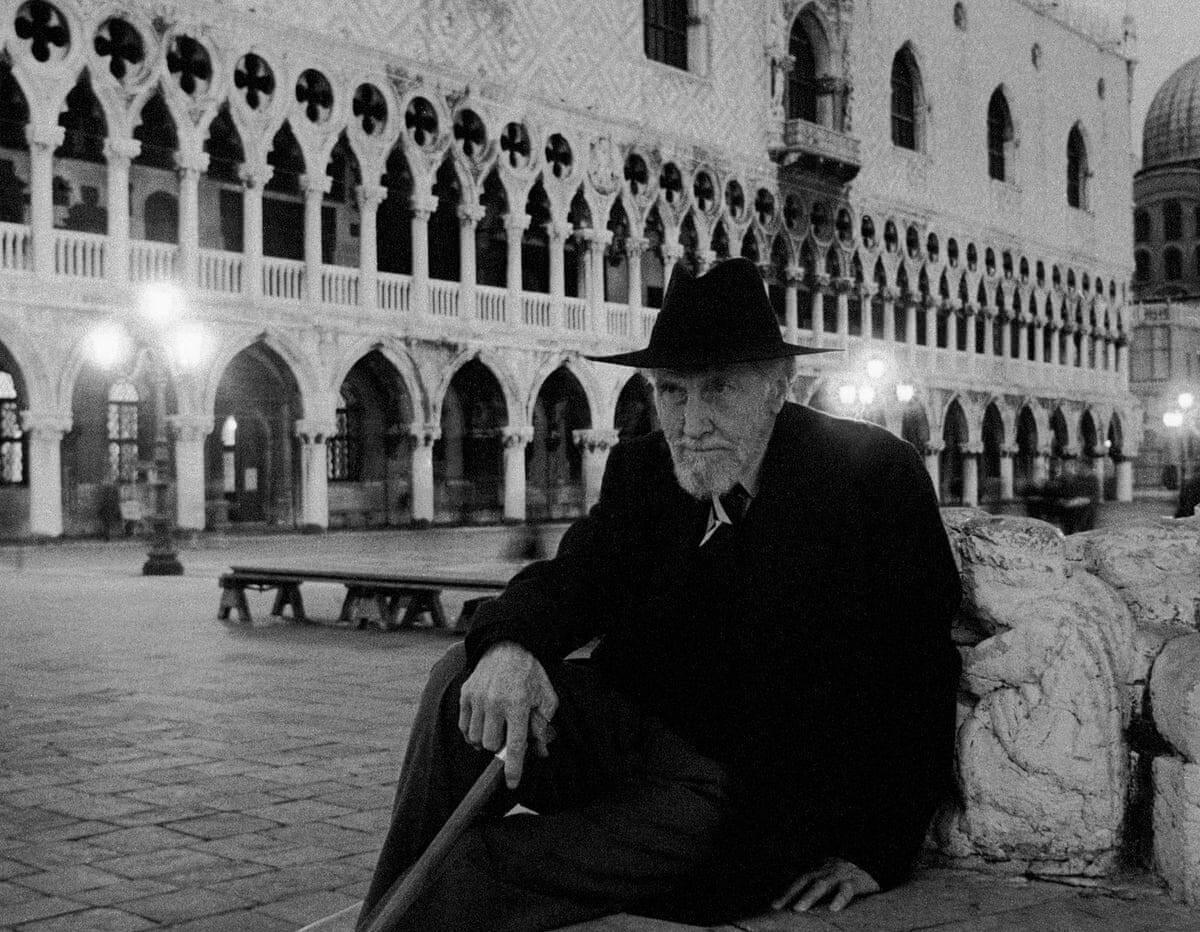
One should read a few bad poets of every era, as one should read a little trash of every contemporary nation, if one would know the worth of the good in either.
—Ezra Pound, Make It New (1934)
In Laocoön; Or the Limits of Poetry and Painting, the German enlightenment critic Gotthold Ephraim Lessing gives one of the most eloquent defenses of poetry as an independent art to have been written since. He proceeds in his aim by an extended series of comparisons between the visual arts (including an analysis of the statue which gives the essay his name) and poetry as it existed in the Classical world. Given its seminal role in European art criticism (including by an indirect source the poetic thought of Ezra Pound) and the inherent interest in its subject matter we cannot go wrong in addressing it here.
Laocoön is as enjoyable for its digressions and supporting anecdotes as for its core arguments, but its basic thesis is quite simple and can be summarized as follows: In poetry we are exposed to imagery not directly through our faculty of sight, but through our mind’s eye, and this has many immediate implications for how poetic imagery is to be handled in contrast to the imagery of the more directly visual arts. Most saliently, the latter are suited to conveying information across space while poetry is most suited for communicating ideas of time. A good poet is therefore one who effectively makes use of this temporal aspect of poetry, while a bad poet ignores the limitations of the medium in indulging himself in the over-description of static imagery, which the mind’s eye cannot effectively appreciate or retain.
Lessing gives the following excerpt from the Die Alpen of Albrecht von Haller (here in translation) as an example of just this sort of bad poetry:1
The lofty gentian’s head in stately grandeur towers
Far o’er the common herd of vulgar weeds and low
Beneath his banners serve communities of flowers;
His azure brethren, too, in rev’rence to him bow.
The blossom’s purest gold in curving radiations
Erect upon the stalk, above its gray robe gleams;
The leaflets’ pearly white with deep green variegations
With flashes many-hued of the moist diamond beams.
O Law beneficent! which strength to beauty plighteth,
And to a shape so fair a fairer soul uniteth.
Here on the ground a plant like a gray mist is twining,
In fashion of a cross its leaves by Nature laid;
Part of the beauteous flower, the gilded beak is shining,
Of a fair bird whose shape of amethyst seems made.
There into fingers cleft a polished leaf reposes,
And o’er a limpid brook its green reflection throws;
With rays of white a striped star encloses
The floweret’s disk, where pink flushes its tender snows.
Thus on the trodden heath are rose and emerald glowing,
And e’en the rugged rocks are purple banners showing.
Though I can claim no proficiency in German, the characterization that Lessing gives of the poem seems to me an apt one, and I can think of no fundamental improvement upon his own analysis:
The details, which the eye takes in at a glance, he enumerates slowly one by one, and it often happens that, by the time he has brought us to the last, we have forgotten the first. Yet from these details we are to form a picture. When we look at an object the various parts are always present to the eye. It can run over them again and again. The ear, however, loses the details it has heard, unless memory retain them. And if they be so retained, what pains and effort it costs to recall their impressions in the proper order and with even the moderate degree of rapidity necessary to the obtaining of a tolerable idea of the whole.
On the other hand, poetry, in speaking directly to both our aural and imaginative faculties, possesses an advantage over purely visual arts that allows it to surpass them in the potential for higher expression when wielded with skill. In lieu of a full recapitulation of Lessing’s argument, it will suffice to say here that he saw the strengths uniquely available to poetry most effectively wielded by the Greeks. In Homer especially, the Greeks attain to a true poetry of motion to which nothing comparable can exist among the purely visual arts. One can gain a basic impression of Lessing’s system of thought simply in reading the various passages that lavish praise on Homer:
The poet here2 is as far beyond the painter, as life is better than a picture. Wrathful, with bow and quiver, Apollo descends from the Olympian towers. I not only see him, but hear him. At every step the arrows rattle on the shoulders of the angry god. He enters among the host like the night. Now he seats himself over against the ships, and, with a terrible clang of the silver bow, sends his first shaft against the mules and dogs. Next he turns his poisoned darts upon the warriors themselves, and unceasing blaze on every side the corpse-laden pyres. It is impossible to translate into any other language the musical painting heard in the poet’s words. Equally impossible would it be to infer it from the canvas. Yet this is the least of the advantages possessed by the poetical picture. Its chief superiority is that it leads us through a whole gallery of pictures up to the point depicted by the artist.
Even when Homer gives himself over to the extensive description of a single object, he never spends too much time on the explanation of a single attribute, always having in mind the dynamic whole:
[The bow of Pandarus] is of horn, of a certain length, well polished, and tipped at both ends with gold. What does he do? Does he enumerate these details thus drily one after another? By no means. That would be telling off such a bow, setting it as a copy, but not painting it. He begins with the hunting of the wild goat from whose horns the bow was made. Pandarus had lain in wait for him among the rocks and slain him. Owing to the extraordinary size of the horns, he decided to use them for a bow. They come under the workman’s hands, who joins them together, polishes, and tips them. And thus, as I have said, the poet shows us in the process of creation, what the painter can only show us as already existing.3
There is much one can learn from Lessing as a scholar, but about the prescriptions he makes for poetry in general I have always had my misgivings. At the very least his is a thesis that inspires some degree of pessimism as to the possibilities afforded by art: the formulae Homer uses to create his poetry-in-motion are inextricably tied to his particular medium of epic poetry and do not make for ready imitation in other poetic forms—and if one were to attempt a deliberate pastiche of Homer today, in the vein of a Virgil or a Camões, then I doubt the pretense of such an attempt would be as well-received by the reading public, to say nothing of the gravity of the task itself. Are we, the sons of a more literate and civilized age—in the connotationally neutral sense—merely to wonder at the artistic sensibility of an older and more directly musical tradition that no longer directly speaks to us, of which countless attempts at imitation have produced “glorious passages but no long or whole satisfaction?” Is there nothing that the subsequent millennia of trial and error since the days of Homer have added to the expressive potential of poetry?
It is only thanks to my engagement with two poetic sources that I can answer these propositions confidently in the negative: the poetry of China and the poetry of Ezra Pound. In the remainder of this writing I will attempt to outline how the artistic sensibility of the latter was influenced by the former.
I. “The heart of his words being…”
I seem to remember that Lessing argued that poetry can only be concerned with those events which are relevant to the passage of time, and thus established the fundamental principle that poetry and painting are two entirely different arts […] There was, however, no element in my present condition which had to follow the course of time and develop successively from one stage to another. My happiness was not due to the fact that one event arrived as another left, and was in turn followed by a third whose eventual departure heralded the birth of number four. It was derived from the atmosphere which pervaded my surroundings: an atmosphere of unvarying intensity which had remained with me there in that one place from the very beginning.
—Natsume Sōseki, Kusamakura (1906). Translated by Alan Turney as The Three-Cornered World.
I have just taken the trouble of mentioning Lessing, so as a matter of housekeeping I would first like to address the main psychological interest of Chinese poetry before turning to Pound’s treatment of it.
The contention I have with Lessing’s thesis is that, while we might accept his general characterization of poems as being grounded in time and the visual arts being grounded in space, there is a type of cognition we engage in in our mind’s eye that is wholly independent of time, or at least the normal rules of causality implied therein. For when we speak of time we are speaking not only of an “objective” phenomenon, but the subjective process by which we mentally order events according to the rules of causality. But in reality we often process the intuitions made available to our mind’s eye in a largely acausal manner or, more strictly speaking, by free association and using a standard of logic much less rigorous than that we would accept in a syllogism or conscious induction. This sort of acausal, or loosely-causal manner of cognition bears a resemblance to the default mode of thought in dreams, where we operate according to a series of unexamined premises and notions of inverted causality that strike us as strange when we recall them upon waking. It is this sort of acausal thinking from which much artistic inspiration springs: when a man looks upon a scene of great beauty in nature and comes to some profound thought (profound to him) about the nature of the world, he is engaging in precisely this more flexible mode of reasoning.
It is my contention that it this a-causal, “timeless” aspect of human cognition which is most directly appealed to by the poetry of China. But a full elaboration of this argument will have to wait a moment yet, for we have almost forgotten about Pound.
II. “A Transmitter and Not a Maker”
Some of my readers no doubt familiar with T.S. Eliott’s comment that Ezra Pound was the “inventor of Chinese poetry for [his] time.” He earned this reputation thanks to his publication of Cathay in 1915, a seminal collection of his own translations of Chinese poetry, consisting mostly of translations of the the poetry of Li Bai 李白 (701-762AD) of the later Tang dynasty, but containing also, among others, a translation from the Shijing 詩經 or Book of Odes of the 11th-7th centuries BC, the archaic poetic canon said to have been compiled by Confucius himself. This feat of invention is made all the more remarkable by the fact that when he produced these translations Pound knew no Chinese. More specifically, he was working off a series of cribs he inherited upon the death of his friend Ernest Fenollosa,4 an Orientalist who had studied Chinese poetry under the instruction of the Japanese scholars Ariga Nagao and Mori Kainan. These notes contain Fenollosa’s own handwritten transcriptions of the poems under study, followed by a close character-by-character translation and the commentary of his professors, and occasionally Fenollosa’s own attempt at a polished poetic translation.
Much is made of the fact that Eliot praised Pound as an inventor, and not as a translator or a transmitter. In the pattern of his translations of the Confucian classics, Ezra Pound has by now become infamous for the many deviations of the poetry of Cathay from its source material. These range from more straightforward errors of translation—some of these errors stemming from the misinterpretations of his ultimately Japanese sources—to the broad liberty he takes in removing and recombining lines from his source material. In this vein, the path to the traditional critical stance on Pound’s translations is clear: that in light of these egregious deviations we cannot really see his poems as translations. That, though he may have nominally been inspired by the poetry of China, enough for it to inform his development of Imagism (and it is always Imagism that these people cite) he saw in Eastern poetry only a reflection of his idiosyncratic theories, and attempted to force reality to conform with the impression on his mental mirror. In fact, there is really something unsettlingly Orientalist about his whole project—and so on and so forth. (And really, as the Romans [sic] tell us, de gustibus non est disputandum, so even setting aside the unreliability of his translations there is not much we can say for him as an artist at all.)
In opposition to this thread of criticism stand two equally flawed lines of defense. The first quite simply concedes that Pound’s compositions are inadmissible as translations, but are nonetheless of independent value as artistic creations in their own right: “Not, good Lord, a translation: a poem made out of words from another poem.”5 The second exaggerates the philological insight that Pound possessed into his Chinese source material, in order to argue that he produced the best translation he could out of limited and flawed sources. A recurring trope of this line of defense is that Ezra Pound, who it is contended was working off of flawed sources as evidenced by the “obvious” errors he repeatedly makes, nonetheless had an ability—sometimes an uncanny ability, sometimes a clairvoyant ability, and so on—to see past his flawed reference material and recover an artistic theme latent in the original. Against these flawed defenses I would like to advance three propositions:
That Ezra Pound was much more well-acquainted with his Chinese sources, even Chinese poetic theory, than is traditionally appreciated;
That Pound’s deviations were not the result of self-indulgence or the transmission of overt errors from his source material (which contained few), but of deliberate artistic choices he made in bringing out an element which he saw as latent in the original poetry;
That “what he saw” in these poems was not simply a projection of his own poetic sensibilities, but a literary sensibility that really existed in Chinese poetry, and that the Chinese themselves described in terms that Pound himself would have found intelligible.
The first of these points is by now scholarly consensus and may be demonstrated immediately. We know thanks to Cathay, A Critical Edition, the first scholarly work to reproduce the original notes of Fenollosa in full, that the notes Pound consulted to produce his translation are really quite thorough, and Fenollosa has not just cribs but relatively detailed commentary on the themes and mechanics of Chinese poetry. For those who can withstand the author’s Academese and the occasional passive-aggressive treatment of his subject matter, these reproduced notes are an invaluable source and the refutation he gives of the “clairvoyant Pound” narrative is quite comprehensive. Here I will take his basic argument for granted since the examples he gives are not terribly interesting in themselves.
The second two propositions are more ambitious, the third perhaps more ambitious than the evidence properly admits, but they are positions that I think deserve exploring for their full worth. At the very least, my hope is that this investigation might serve as a corrective to the erroneous conceptions which are now mainstream.
