

‘The ferret, and the chameleon, and the lizard, and the snail, and the mole; these are unclean to you among all that creep [...] and every earthen vessel, whereinto any of them falleth, whatsoever is in it shall be unclean; and ye shall break it.’
Leviticus 11:31-33
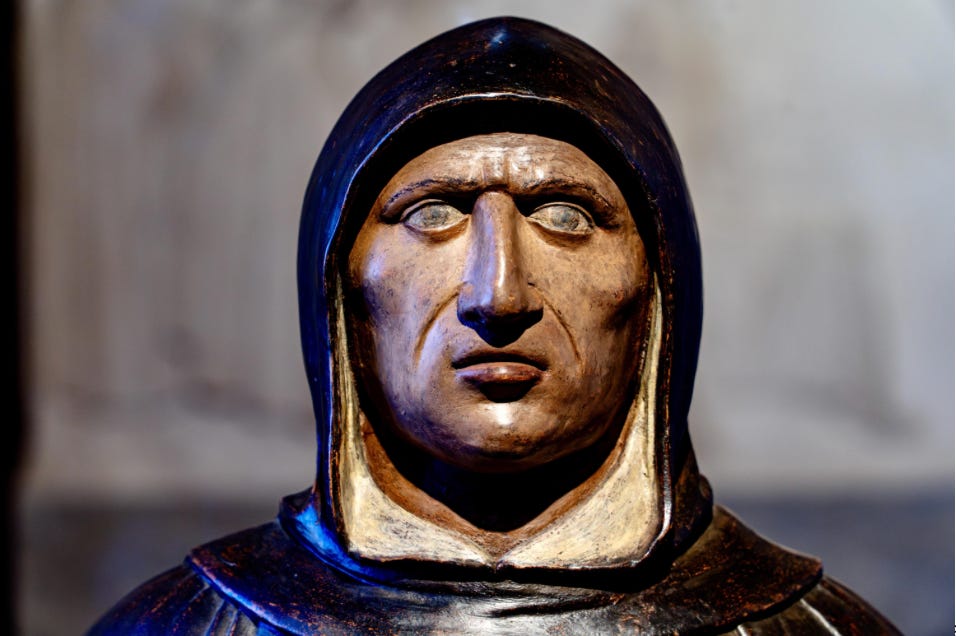
I tell you: I came to free the world from all laws and statutes which have been till now, for all that was the work of the hands of Satan, and by that all fell into his hand. I must destroy all that, and only make that which is black look utterly white. At that time the good God will reveal himself.
To the Brethren,
The last few months must’ve proved quite some headache for old Charles Windsor; between the drawn-out spectacle of Prince Andrew’s shenanigans, and Will Lloyd’s spirited attack in the New Statesman, how many nights since has he tossed and turned, worried the Crown of England might suffer the indignity of coming to its end on his weary head? What succor then, what sweet succor, he will have found in the pages of The Critic. The verdict is in: ‘The British Monarchy has never been more secure.’ The final word; Sebastian Milbank, the voice of Reason, gentle as a mooing dove. That’s it. There goes the solemn clap of the gavel. Ever tried, ever failed.
What we should find telling in Milbank’s piece is that he finds himself, as is common in the collaborator camp, unable to mount a defence of the monarchy on its own grounds, in the positive, and reverts instead to waving away the abolitionist argument as unfeasible. Apparently, since the King ‘polls’ as more popular than Nigel Farage, there must exist a large contingent in this country who would prevent any attempt to remove him by an elected politician and, besides, the path toward something resembling a presidential system, with the powers of the Crown divested to an elected executive, is so long and so complicated it is hardly worth considering. What would we put on the stamps? No no no, so much for all that; back to bed.
Not one word of this amounts to an argument in favour of the monarchy from first principles: that first principle being, whether or not Charles or anyone else still believes in it, the divine right of kings - a position that Milbank, if this article is anything to go by, does not hold to. Why then so much huffing and puffing? Anyone familiar with his usual output will notice that, on this occasion, his tone is a great deal more animated than we have come to expect; the piece reads as though, mid way through writing it, the author often found himself so hot and bothered at Will Lloyd’s audacity he had to take breaks to cool his flaring nostrils in a nearby pond, like an enormous baby hippo. The reason, I suspect, is that he is more sensitive than most to a certain element lurking in the abolitionist proposition that most will have overlooked - that, the King being its de jure head, the end of the monarchy threatens to bring with it the dissolution of the Church of England. On this question we should make no apologies: the dissolution of the Church of England is not, for us, an unintended consequence of the abolition of the Monarchy. These are two flightless birds to be taken out with the same stone.
It would be too easy, in this author’s view, to say that, on the whole, Britain is an irreligious country and that as the last of its congregants pass away the Church of England will disappear of its own accord, leaving Anglicanism to the Nigerians - that is not altogether true. The Church has in fact broken away in recent years from its longstanding trend of steadily diminishing attendance, undergoing a period of historically unprecedented growth - doubling since the 2020 Covid nadir, and even beyond the post-lockdown rebound, up a modest 1.6 percent from 2023 to 2024. Obviously, there is a significant portion of this which is a consequence of immigration, particularly from Africa, but there is a not insignificant portion of this which comes from elsewhere. There does indeed exist a real contingent of reliably church-attending natively British people under the age of forty. They are not, as certain forces would lead you to believe, drawn from the ranks of ‘Weird Catholic Twitter’ - I give no credit here to mousey-blonde-haired dusky-voiced e-convert sexpot podcasters like Connor Tomlinson. These are people who were fond of Tim Farron, and let out a collective wince when he was bullied into pretending not to believe homosexuality is a sin under interrogation by Conservative MP Nigel Evans (a statement he would later recount, in an interview with Premier Christian Radio.) While quietly holding conservative views on gay marriage and abortion, they are broadly liberal on issues like immigration and climate change and, having quietly resigned themselves to the fact that religious conservatism will never again hold sway in mainstream British politics, do not consider themselves part of the political Right. I imagine one might have run into a few of these types if you attended Oxford or Cambridge. This is a largely invisible demographic I am only personally familiar with only by virtue of having attended my parents’ conservative, Low Church Anglican service through my teenage years: a congregation well-stocked with middle-class, relatively young English people whose work colleagues, I would wager, would be quite surprised to discover they go to Church and pray before bed.
